


Understanding Tilted EML Modules in Optical Design
In optical design, the integration of Edge-Emitting Lasers (EMLs) into packages plays a critical role in device performance. One particular configuration gaining attention is the tilted EML module. This design approach addresses alignment challenges and optimizes light coupling efficiency in complex optical systems. In this post, I will walk you through the fundamentals of tilted EML modules, their advantages, and practical considerations for implementation.
What Is a Tilted EML Module?
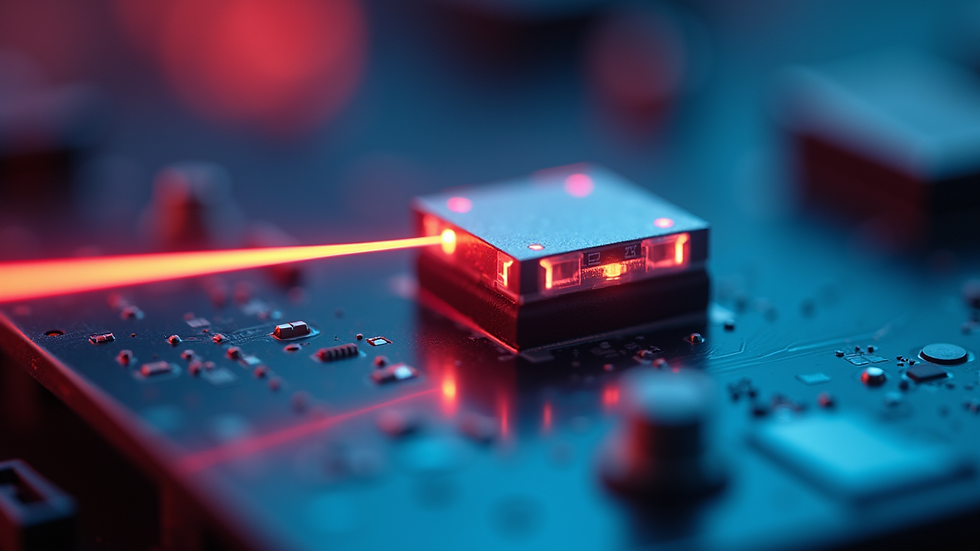
A tilted EML module refers to an optical package where the laser diode is mounted at a slight angle relative to the optical axis of the system. This tilt is intentional and designed to improve the coupling of the laser output into optical fibers or other components.
Why Tilt the EML?
Reduce Back Reflections: Tilting the laser reduces the amount of light reflected back into the laser cavity, which can cause noise and instability.
Optimize Beam Alignment: The tilt helps align the laser beam with the receiving optics or fiber core, improving coupling efficiency.
Minimize Crosstalk: In multi-channel systems, tilting can help separate beams spatially to reduce interference.
The tilt angle is typically small, ranging from a few degrees up to about 10 degrees, depending on the application and packaging constraints.
Typical Applications
Tilted EML modules are widely used in:
High-speed optical communication systems
Aerospace and defense laser systems
High-power laser modules requiring precise beam control
Key Features of Tilted EML Modules
When designing or selecting a tilted EML module, several features are critical to consider:
Mechanical Design
Package Material: Ceramic packaging is preferred for its thermal stability and mechanical robustness.
Mounting Precision: The tilt angle must be controlled within tight tolerances to ensure consistent optical performance.
Thermal Management: Efficient heat dissipation is essential to maintain laser performance and longevity.
Optical Performance
Beam Quality: The tilt should not degrade the beam profile or increase divergence beyond acceptable limits.
Coupling Efficiency: Proper tilt improves the overlap between the laser mode and the fiber mode.
Back Reflection Suppression: The angle reduces feedback into the laser cavity, enhancing signal stability.
Electrical Considerations
Contact Reliability: Electrical contacts must maintain integrity despite the tilted orientation.
Signal Integrity: Minimizing electrical noise is crucial for high-speed modulation.
Integration Challenges
Aligning the tilted EML with other optical components requires precision fixtures and alignment tools.
Packaging must accommodate the tilt without increasing the overall module size excessively.
Does Converting EML to PDF Change Formatting?
This question often arises in documentation and data handling related to EML files, but it is unrelated to optical design. However, understanding the difference between EML (email message files) and PDF (document format) is important in technical communication.
EML files store email messages with headers and body content.
PDF files are designed for fixed-layout documents.
When converting EML to PDF, formatting can change due to differences in how text, images, and attachments are handled. This conversion is typically done for archiving or sharing purposes and does not affect the physical EML devices or modules discussed here.
Practical Considerations for Using Tilted EML Modules
Implementing a tilted EML module requires attention to several practical factors:
Alignment and Assembly
Use precision jigs to set the tilt angle during assembly.
Verify alignment with optical measurement tools such as beam profilers or power meters.
Consider automated alignment systems for high-volume production.
Thermal and Mechanical Stability
Select packaging materials with low thermal expansion coefficients.
Design heat sinks or cooling systems to maintain stable operating temperatures.
Ensure mechanical fixtures prevent tilt angle drift over time.
Testing and Quality Control
Perform optical power and wavelength measurements to confirm performance.
Test for back reflection levels to ensure tilt effectiveness.
Conduct reliability testing under environmental stress conditions.
Supply Chain and Procurement
Work with suppliers who specialize in custom ceramic packaging and optical components.
Specify tilt angle tolerances and testing requirements clearly in purchase orders.
Consider lead times and customization capabilities when planning production.
One useful resource for understanding packaging options is the tilted eml package in to can configuration, which offers a compact and reliable solution for integrating tilted EMLs into standard can packages.

Future Trends in Tilted EML Module Design
The demand for higher data rates and more compact optical systems drives innovation in tilted EML modules. Some emerging trends include:
Advanced Packaging Materials: New ceramics and composites improve thermal and mechanical properties.
Micro-Optics Integration: Incorporating micro-lenses or gratings directly on the package to enhance beam shaping.
Automated Assembly: Robotics and machine vision improve alignment precision and throughput.
Custom Tilt Angles: Tailored tilt angles for specific fiber types or multi-channel arrays.
These developments aim to reduce costs while improving performance, supporting industries like aerospace, defense, and high-power laser manufacturing.
Enhancing Optical System Performance with Tilted EML Modules
Incorporating a tilted EML module into your optical design can significantly improve system reliability and efficiency. By carefully selecting the package, controlling the tilt angle, and ensuring precise alignment, you can:
Increase coupling efficiency to fibers or waveguides
Reduce noise caused by back reflections
Improve overall system stability and lifespan
Working closely with specialized suppliers who understand the nuances of ceramic packaging and optical integration is essential. This collaboration ensures that your design meets stringent performance requirements while remaining cost-effective.
Understanding the role and implementation of tilted EML modules is crucial for advancing optical technologies. Whether you are designing high-speed communication systems or rugged aerospace lasers, mastering these concepts will help you achieve superior results.


Comments